

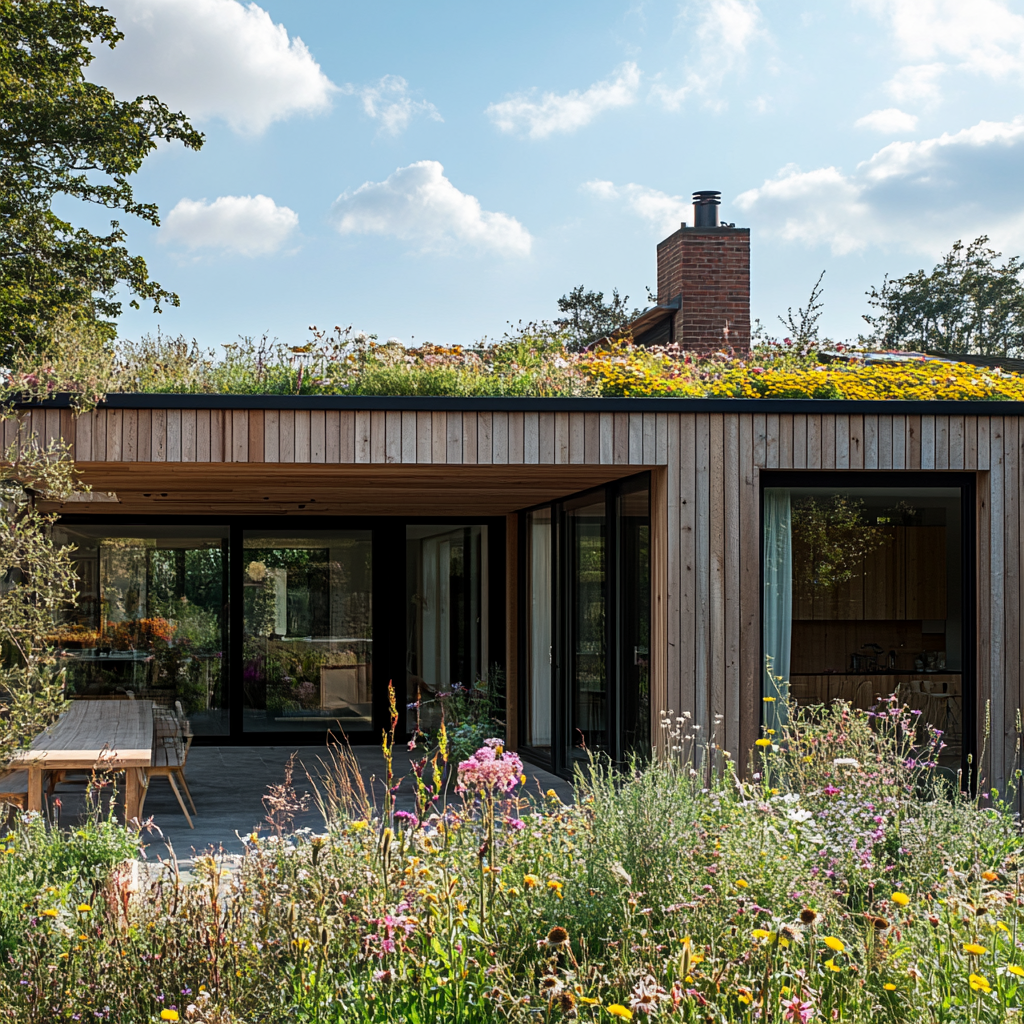
There’s a quiet revolution happening in Cheshire’s high-end property market. Drive through Alderley Edge or along Wilmslow’s Hawthorn Lane, and you’ll spot solar tiles that blend seamlessly with slate roofs. Visit new commercial developments in Knutsford, and you’ll find green roofs and rainwater harvesting systems that weren’t there five years ago. Luxury and sustainability—once seen as contradictory—are increasingly inseparable.
Cheshire’s discerning property owners and business leaders understand that genuine luxury now means building responsibly. Not because regulations demand it (though they increasingly do), but because environmental performance has become a marker of quality and forward thinking. Triple-glazed windows aren’t a compromise; they’re an upgrade. Solar panels aren’t an afterthought; they’re integrated design features. Reclaimed oak isn’t a budget choice; it’s a statement of craft and authenticity.
Whether you’re planning a luxury home in Prestbury or a commercial space in Chester, sustainable design strategies enhance both your property’s performance and its long-term value. Here’s how Cheshire’s most sophisticated projects are getting it right.
Table of Contents
- Sustainable Building Materials
- Energy-Efficient Insulation and Windows
- Solar Power and Renewable Energy Integration
- Water Conservation and Management
- Intelligent Climate Control Systems
- Eco-Friendly Landscaping and Green Roofs
- Low-Impact Interiors and Non-Toxic Materials
- Natural Lighting and Daylighting Solutions
- Architectural Features That Embrace Nature
Sustainable Building Materials
Material selection sets the environmental agenda for your entire project. The good news: sustainable materials have evolved far beyond compromise aesthetics. Today’s reclaimed timbers, recycled metals, and low-carbon alternatives often exceed new materials in character and performance.
Materials that combine luxury and responsibility:
Reclaimed wood — Structural oak beams salvaged from Victorian mills or Georgian warehouses bring authenticity that new timber simply cannot replicate. The patina, the grain patterns, the nail holes and saw marks—these tell stories while reducing demand for virgin lumber. Several high-end residential projects in Hale have incorporated reclaimed pine floorboards that cost more than new hardwood but deliver something genuinely irreplaceable. For commercial spaces, reclaimed timber cladding or feature walls create immediate visual interest and conversation value.
Bamboo and cork — Bamboo reaches maturity in 3-5 years compared to 20-30 years for hardwoods, making it genuinely renewable. Its natural grain creates contemporary aesthetics particularly suited to modern commercial interiors or minimalist residential spaces. Cork, harvested without harming the tree, provides natural thermal and acoustic insulation—ideal for Cheshire’s climate and increasingly popular in home offices where sound control matters. Both materials work well for flooring, wall coverings, and custom joinery.
Recycled metal and glass — Aluminium can be recycled indefinitely without quality loss, making it perfect for window frames, structural elements, and architectural detailing. Steel with recycled content (often 90%+ in structural applications) performs identically to virgin material while dramatically reducing embodied carbon. For commercial buildings, exposed recycled steel beams or weathered Corten steel cladding create industrial-chic aesthetics that age beautifully. Glass, similarly, recycles without degradation—useful for countertops, decorative features, or architectural glazing.
Low-carbon concrete — Traditional concrete accounts for 8% of global CO2 emissions, but alternatives now exist. Ground granulated blast-furnace slag (GGBS) or pulverized fuel ash (PFA) can replace 50-70% of Portland cement, cutting embodied carbon by 40-60% with minimal cost premium. For foundations, ground floors, and structural elements where concrete is unavoidable, specifying these alternatives makes significant environmental impact without compromising structural performance.
Energy-Efficient Insulation and Windows
Cheshire’s climate—damp, variable, rarely extreme—demands buildings that manage heat and moisture intelligently. The difference between adequate and excellent thermal performance often determines whether occupants feel comfortable year-round or constantly adjust thermostats.
Insulation and glazing that actually works:
High-performance insulation — Minimum standards have risen dramatically: 300mm in roofs (U-value 0.13 W/m²K or better), 150mm in walls (U-value 0.18 W/m²K). Natural materials like sheep’s wool insulation provide excellent thermal performance while regulating moisture naturally—particularly useful in Cheshire’s damp climate where vapour control matters. Spray foam creates airtight envelopes essential for PassivHaus-level performance, though it requires careful specification to avoid trapping moisture. For commercial buildings, blown cellulose (made from recycled newspaper) offers fire resistance and acoustic control alongside thermal benefits.
Triple-glazed windows — Double glazing is now baseline; serious energy efficiency requires triple glazing with low-emissivity coatings and argon or krypton gas fills. This achieves U-values around 0.8 W/m²K compared to 1.4-1.6 for standard double glazing—nearly doubling thermal performance. For luxury homes with large glazed areas (floor-to-ceiling windows, sliding walls), this upgrade eliminates cold spots, reduces condensation, and cuts heating costs by 30-40%. The slightly higher upfront cost (£100-150 per square metre versus £80-100 for double glazing) pays back within 8-12 years through reduced energy bills.
Window positioning and solar gain — Passive solar design costs nothing but requires thinking ahead. South-facing glazing (with appropriate shading for summer) captures winter warmth; north-facing glass should be minimized. East-facing windows provide morning light without afternoon heat gain; west-facing windows flood evening spaces with light but may require external shading or solar control glass. Several recent commercial projects in Knutsford have used automated external blinds on west-facing façades—they fold away completely when not needed but prevent summer overheating without blocking views.
Solar Power and Renewable Energy Integration
Solar technology has reached the point where it makes financial sense even in Manchester’s rain shadow. Modern panels generate useful power in overcast conditions, and prices have dropped 80% in the last decade. For properties with suitable roof orientation and minimal shading, solar is no longer experimental—it’s sensible economics.
Renewable energy systems that pay their way:
Solar panels — A typical 4kW domestic system (12-16 panels) costs £6,000-8,000 installed and generates 3,500-4,500 kWh annually—covering 60-80% of average household consumption. Larger luxury homes might install 8-10kW systems; commercial properties with expansive roofs can go significantly larger. With feed-in tariffs replaced by the Smart Export Guarantee, excess generation earns 4-7p per kWh. Payback periods now run 10-14 years, with panels warranted for 25+ years. The economics improve further if paired with battery storage (£4,000-6,000 for 10kWh capacity), allowing you to store excess daytime generation for evening use.
Solar roof tiles — For conservation areas or luxury homes where aesthetics matter, solar tiles (Tesla Solar Roof, SolteQ, or GB-Sol) integrate photovoltaic cells into the roof covering itself. They’re significantly more expensive—£18,000-25,000 for a typical residential installation—but eliminate the appearance concerns that sometimes prevent traditional panel installation. Several high-end properties in Prestbury have specified solar tiles on south-facing roof sections, maintaining streetscape aesthetics while achieving substantial energy generation.
Geothermal heating and cooling — Ground-source heat pumps (GSHPs) extract stable temperatures from 1-2 metres underground, providing heating in winter and cooling in summer. For properties with sufficient land (boreholes require 5-10 metres spacing; horizontal collectors need approximately 250 square metres per 10kW capacity), GSHPs deliver coefficient of performance (CoP) of 3-4, meaning every 1kW of electricity generates 3-4kW of heat. Installation costs £20,000-35,000 for residential systems, but running costs are 50-60% lower than oil or LPG heating, with payback in 10-15 years. Several commercial developments in Chester’s business parks have installed GSHP systems that also provide summer cooling—valuable for office spaces with high occupancy and equipment heat loads.
Water Conservation and Management
Cheshire receives 800-900mm of annual rainfall, yet we import water from Welsh reservoirs. That paradox reflects infrastructure limitations rather than shortage—meaning on-site water management makes both environmental and practical sense, particularly for large properties with landscaping needs.
Water systems that close the loop:
Rainwater harvesting — A 200 square metre roof (typical for a 4-bedroom luxury home) captures approximately 160,000 litres annually in Cheshire’s climate. Filtered and stored in underground tanks (5,000-10,000 litre capacity), this supplies toilets, washing machines, and garden irrigation—reducing mains water consumption by 40-50%. System costs run £3,000-6,000 installed, with payback through water bill savings in 12-18 years. For commercial buildings with extensive hard landscaping or operational water needs, payback accelerates significantly. The Chapel Street development in Alderley Edge incorporated a 15,000-litre rainwater harvesting system that supplies all WC flushing and landscape irrigation.
Greywater recycling — More sophisticated than rainwater harvesting, greywater systems treat water from showers, baths, and washing machines for reuse in toilet flushing and irrigation. Treatment (usually biological filtration) removes soaps, detergents, and particulates. Typical residential systems cost £4,000-8,000 installed and can reduce mains water consumption by an additional 30%. For luxury homes with multiple bathrooms generating substantial greywater volumes, or commercial buildings with gym/leisure facilities, the economics improve. Maintenance requirements (filter cleaning, system checks) mean these suit properties with ongoing management rather than occasional-occupancy second homes.
Low-flow fixtures — Modern low-flow taps (5-6 litres/minute vs. 10-15 for traditional fixtures) and dual-flush WCs (3/6 litre vs. 7-9 litre for older installations) reduce consumption without noticeable performance compromise. Luxury doesn’t require waste—several high-end bathroom fitting suppliers now offer aerating taps that mix air with water, maintaining pressure while halving flow rates. For new builds or major renovations, specifying efficient fixtures costs negligibly more upfront but reduces water heating energy (where hot water is involved) and mains water consumption permanently.
Intelligent Climate Control Systems
Smart building systems aren’t about gadgetry—they’re about not heating empty rooms, not cooling spaces when windows are open, not running systems harder than necessary. For properties with multiple zones, variable occupancy, or complex heating/cooling needs, intelligent control delivers both comfort and efficiency.
Climate control that thinks ahead:
Smart thermostats and learning systems — Devices like Nest, Ecobee, or Tado learn occupancy patterns and adjust heating/cooling schedules automatically. They monitor weather forecasts and pre-heat or pre-cool to reach target temperature exactly when needed. They detect open windows and pause heating in that zone. They adjust humidity levels to optimize perceived comfort while minimizing energy use. In multi-zone systems (essential for larger properties), room-by-room control ensures you’re not heating the guest bedroom while away or over-cooling the study when working from home. Annual energy savings typically run 15-25% compared to traditional programmable thermostats—enough to pay back the £200-400 hardware cost within 2-3 years.
Zoned heating and cooling — Commercial buildings inherently require zoning (reception areas, meeting rooms, open-plan offices all have different thermal demands), but larger residential properties benefit equally. A luxury home might have separate zones for bedrooms, living spaces, kitchen, home gym, and guest wing—each with independent temperature control. Underfloor heating simplifies zoning (each circuit can be independently controlled); radiator systems require thermostatic radiator valves (TRVs) on each radiator. The result: occupied spaces stay comfortable while unoccupied areas run at setback temperatures, cutting heating loads by 20-30%.
Humidity and air quality monitoring — Cheshire’s damp climate makes humidity control particularly valuable. Integrated systems monitor humidity levels and activate mechanical ventilation when needed, preventing mould growth and maintaining air quality without continuous over-ventilation (which wastes heat). For properties with mechanical ventilation heat recovery (MVHR), this becomes even more important—balanced ventilation recovers 85-95% of heat from extracted air while providing continuous fresh air supply. Several recent high-end residential projects in Alderley Edge have specified MVHR systems that maintain excellent air quality while achieving PassivHaus-level airtightness.
Eco-Friendly Landscaping and Green Roofs
Outdoor spaces represent significant opportunities for environmental enhancement—supporting biodiversity, managing surface water, improving microclimates, and creating habitats that have largely disappeared from intensive agriculture in Cheshire’s lowlands.
Landscaping strategies that support local ecosystems:
Native plants and meadow gardens — Species native to Cheshire—hawthorn, blackthorn, field maple, wildflower meadows—require minimal irrigation once established, support local wildlife (particularly pollinators increasingly under pressure), and create seasonal interest without demanding constant maintenance. Several high-end properties along Wilmslow’s Finney Lane have replaced formal lawns with meadow gardens that require mowing twice annually rather than weekly, eliminating irrigation and fertilizer while supporting bee and butterfly populations. For commercial properties, native hedgerows provide screening, wildlife corridors, and far lower maintenance than exotic ornamental planting.
Green roofs — Living roofs planted with sedum, wildflowers, or even intensive gardens provide multiple benefits: insulation (both thermal and acoustic), rainwater absorption (reducing runoff by 50-70%), habitat creation, and urban heat island mitigation. Extensive green roofs (sedum-planted, 80-150mm substrate depth) add approximately £50-80 per square metre and work on slopes up to 30 degrees—suitable for most commercial buildings and many residential applications. Intensive green roofs (full gardens with substrate 200mm+) support larger plants including small trees but require structural assessment and irrigation. Several commercial developments in Knutsford town centre have incorporated green roofs that are barely visible from street level but significantly improve building performance and provide rooftop amenity space.
Permeable paving and sustainable drainage — Impermeable surfaces (tarmac, standard concrete paving) shed rainfall directly into drainage systems, increasing flood risk downstream. Permeable alternatives—resin-bound gravel, permeable concrete block paving, gravel grids—allow water infiltration into the ground, reducing runoff while recharging groundwater. For driveways, parking areas, and hard landscaping, specifying permeable surfaces often satisfies planning requirements for sustainable drainage (SuDS) while providing superior aesthetics compared to tarmac. Several luxury residential projects have used resin-bound gravel (natural aggregate bound in clear resin) that maintains permeability while creating smooth, elegant surfaces suitable for vehicle traffic.
Low-Impact Interiors and Non-Toxic Materials
Indoor air quality matters more than most people realize—we spend 90% of our time indoors, and poor air quality contributes to respiratory issues, allergic reactions, and general malaise. Specifying low-toxicity materials improves occupant health while reducing environmental impact.
Interior materials that support wellbeing:
Low-VOC paints and finishes — Volatile organic compounds (VOCs) off-gas from conventional paints, varnishes, and adhesives for months or years after application, contributing to poor indoor air quality. Low-VOC or zero-VOC alternatives (now available from all major manufacturers including Farrow & Ball, Little Greene, and Crown) eliminate this issue without performance compromise. For luxury interiors where paint quality matters, several brands offer zero-VOC formulations with excellent coverage, durability, and depth of color. Natural paints (clay-based, milk-based, or plant-oil formulations) go further, using only natural ingredients—though coverage may require additional coats.
Sustainable flooring — Reclaimed oak or elm boards bring character impossible to replicate with new timber. Cork provides natural acoustic and thermal insulation particularly valuable in apartments or multi-story homes. Bamboo creates contemporary aesthetics with rapid renewability. For commercial spaces, linoleum (made from linseed oil, cork powder, and natural resins) offers durability, easy maintenance, and complete biodegradability—superior environmental performance to vinyl while lasting 25-40 years with proper maintenance. Several recent office fit-outs in Chester have specified Marmoleum (premium linoleum) that performs well in high-traffic areas while meeting strict indoor air quality requirements.
Natural and recycled fabrics — Organic cotton, linen, hemp, and wool upholstery fabrics eliminate pesticide residues and synthetic treatments common in conventional textiles. For commercial applications (office seating, hospitality furniture), recycled polyester from post-consumer plastic bottles offers durability and stain resistance while diverting waste from landfill. Several luxury residential projects have specified organic wool carpets or natural fiber rugs (jute, sisal, seagrass) that provide texture and warmth without synthetic off-gassing.
Natural Lighting and Daylighting Solutions
Daylight doesn’t just reduce lighting energy—it improves mood, regulates circadian rhythms, enhances productivity, and makes spaces feel larger and more welcoming. Effective daylighting requires thinking about both quantity and quality: enough light without glare or excessive heat gain.
Strategies that maximize daylight:
Skylights and roof lights — Flat roof skylights or pitched-roof Velux windows introduce overhead light into deep-plan spaces where traditional windows can’t reach—kitchens, bathrooms, hallways, internal offices in commercial buildings. Positioning skylights on north-facing roof sections provides consistent, glare-free illumination throughout the day. For larger luxury homes, architectural roof lights (often large frameless units) can introduce dramatic overhead light into double-height living spaces or galleries. Several recent residential projects in Prestbury have incorporated 3-4 metre roof lights above dining areas that eliminate any need for daytime artificial lighting.
Solar tubes and light pipes — For smaller spaces or where structural constraints limit skylight installation, solar tubes (reflective tubes typically 300-350mm diameter) capture roof-level daylight and channel it through ceiling voids to illuminate rooms below. These work particularly well for internal bathrooms, walk-in wardrobes, or corridors where traditional windows aren’t feasible. Installation costs £300-600 per tube—far less than structural skylights—and they provide surprisingly effective illumination equivalent to a 100W bulb on sunny days, 40-60W in overcast conditions.
Window design and internal sightlines — Open-plan layouts allow light from perimeter windows to penetrate deep into floor plates—essential in commercial spaces where central areas may be 10+ metres from external walls. Internal glazing (glass partitions, glazed doors) maintains visual separation while allowing light transmission. For residential properties, eliminating unnecessary partition walls and using internal glazing where privacy isn’t critical (between hallways and living rooms, for example) dramatically improves light distribution. Several recent commercial fit-outs in Knutsford have used floor-to-ceiling glass partitions for meeting rooms, maintaining acoustic separation while allowing borrowed light into corridor spaces.
Architectural Features That Embrace Nature
Biophilic design—literally “love of living things”—recognizes that humans thrive when connected to natural elements. This isn’t sentimentality; it’s backed by research showing measurable improvements in stress reduction, cognitive performance, and recovery from illness in buildings with natural materials, views, and living elements.
Design features that connect inside and outside:
Indoor-outdoor transitions — Large sliding or folding glass walls that open completely dissolve the boundary between interior and exterior, extending living space into gardens during favorable weather. For Cheshire’s climate, this means designing covered or partially covered external areas (pergolas, loggias, covered terraces) that function as intermediate zones—sheltered enough for use in light rain but open enough to feel outdoor. Several luxury homes in Alderley Edge have incorporated 4-6 metre sliding walls that fully retract, converting conservatories or garden rooms into pavilions that transition from winter enclosures to summer outdoor spaces.
Natural materials and textures — Stone, timber, clay, and other natural materials create sensory connection to nature through visual patterns, textures, and even scent. Exposed structural timber beams, stone feature walls, clay plaster finishes—these elements register subconsciously as “natural” and create environments that feel calming rather than clinical. For commercial interiors, incorporating natural materials (timber acoustic panels, stone flooring in reception areas, living moss walls) distinguishes spaces from generic corporate fit-outs while demonstrating environmental commitment.
Living walls and biophilic elements — Vertical gardens or living walls (plants growing in wall-mounted modular systems) improve air quality, provide acoustic absorption, and create striking visual features. Preserved moss walls (natural moss preserved with glycerine, requiring no maintenance or watering) offer similar aesthetics without ongoing care requirements—suitable for commercial spaces where maintenance access is limited. Water features—internal courtyards with fountains, reflecting pools visible from principal rooms—introduce movement and sound that enliven spaces and mask traffic noise. Several high-end residential projects have incorporated internal courtyard gardens with automatic irrigation and LED grow lights that maintain planting year-round while providing views from multiple rooms.
Our Services
At Draw Plan, we integrate sustainable design thinking from initial concept through to building regulations approval:
- Feasibility Drawings — Early-stage analysis exploring solar orientation, passive design opportunities, and sustainable material options before committing to detailed design.
- Planning Drawings — Comprehensive planning applications that present sustainable features (green roofs, solar integration, landscaping strategies) persuasively to planning authorities while securing approval.
- Building Regulations Drawings — Detailed technical documentation demonstrating compliance with energy performance requirements while optimizing thermal efficiency, airtightness, and renewable energy integration.
Whether you’re planning a PassivHaus-standard luxury home or a BREEAM Excellent commercial development, we bring the technical expertise and design sensibility that sustainable projects demand.
Book a Consultation
Planning an eco-friendly project in Cheshire? Get in touch with our team to discuss how sustainable design strategies can enhance your development—from initial feasibility through to final approvals.