

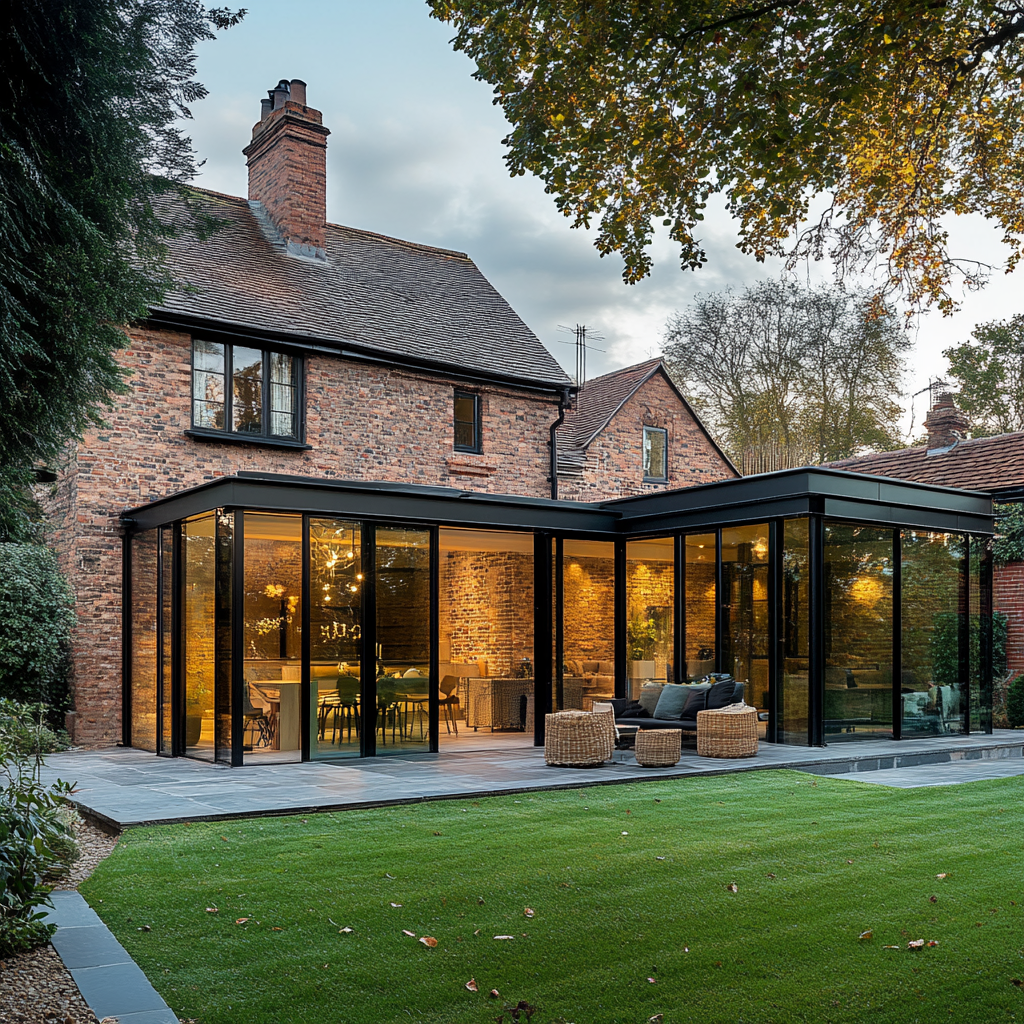
Cheshire has one of the highest concentrations of listed buildings in the North West, with conservation areas spanning from Knutsford’s King Street to Chester’s medieval rows and Prestbury’s village core. If you own a period property in this part of the world – whether that’s a Georgian townhouse in Alderley Edge, a Victorian villa in Hale, or an Edwardian semi in Wilmslow — you already know the appeal: original proportions, craftsmanship that modern builds rarely match, and a sense of place that new developments struggle to replicate.
The challenge is making these homes work for contemporary life without gutting the very qualities that make them worth owning. Poor insulation, awkward room layouts, outdated services, and restrictive planning designations all complicate matters. But with the right architectural approach, a historic renovation can deliver genuine modern comfort while actually enhancing a property’s character and long-term value.
This guide covers the practical realities of modernising a period home in Cheshire – from navigating listed building consent through to integrating smart technology discreetly – with specific detail on what works, what doesn’t, and what the planning framework actually requires.
In this post:
- Understanding listed building consent and conservation area rules in Cheshire
- Preserving and restoring original architectural details
- Reconfiguring period layouts for open-plan living
- Upgrading insulation and energy performance in older construction
- Modernising kitchens and bathrooms without losing period character
- Enhancing natural light and adding layered modern lighting
- Blending traditional furnishings with contemporary design
- Integrating smart and sustainable technology discreetly
- How Draw Plan approaches historic home renovations
Understanding Listed Building Consent and Conservation Area Rules
Before you pick up a paint scraper, let alone knock through a wall, you need to understand the planning framework that applies to your property. This is where many historic renovations in Cheshire come unstuck – homeowners assume standard permitted development rights apply, only to discover their property sits within a conservation area or carries a listing they weren’t aware of.
Listed building consent is a separate process from planning permission and applies to any works – internal or external — that affect the character of a listed building. That includes seemingly minor changes like removing an internal wall, replacing windows, or even stripping Victorian plasterwork. Cheshire East and Cheshire West & Chester councils both maintain active conservation teams, and enforcement action for unauthorised works to listed buildings is a criminal offence, not merely a planning breach.
Conservation area restrictions are less severe but still significant. If your property falls within one of Cheshire’s numerous conservation areas – and many desirable villages like Prestbury, Great Budworth, and parts of Knutsford are entirely covered – you’ll face additional controls on demolition, tree works, and external alterations. Permitted development rights are often curtailed, meaning changes that would be straightforward elsewhere require formal application.
The practical starting point is commissioning feasibility drawings before committing to any design direction. A feasibility study identifies what designations apply, tests whether your aspirations are realistic within the regulatory framework, and highlights where you’ll need specialist input – such as a heritage impact assessment or structural engineer’s report on load-bearing walls.
Working with an architectural practice that understands the local conservation officers’ expectations makes a material difference to approval timescales. Councils respond far better to applications that demonstrate genuine engagement with a building’s significance rather than treating heritage as an obstacle to overcome.
Preserving and Restoring Original Architectural Details
The features that give a period property its character – cornicing, ceiling roses, original fireplaces, timber sash windows, encaustic floor tiles, dado rails – are irreplaceable in any meaningful sense. Modern reproductions exist, but they rarely match the depth of profile or material quality of originals, and removing genuine period details will always diminish a property’s value and architectural integrity.
Restore rather than replace should be the default position. Timber sash windows, for example, are almost always repairable. A specialist joiner can splice in new timber sections, replace sash cords, install draught-proofing strips, and fit slim-profile secondary glazing – delivering comparable thermal performance to replacement double glazing without sacrificing the original window profiles. This matters enormously in conservation areas and listed buildings where replacement windows are frequently refused consent.
Fireplaces and surrounds that have been boarded over or removed entirely during previous modernisation attempts can often be reinstated. Original fire surrounds sometimes turn up in the property itself – stored in lofts, garages, or outbuildings by previous owners who couldn’t bring themselves to skip them. Where originals are genuinely lost, architectural salvage yards across the North West carry period-appropriate replacements, and a skilled plasterer can recreate missing cornicing to match surviving sections.
Exposed structural elements – timber beams, brick arches, stone lintels – add enormous character when properly treated. The key is restraint: exposing a single feature wall of original brickwork in a kitchen-diner creates a striking focal point, while stripping every surface back to bare brick creates a cold, industrial atmosphere that fights the domestic character of a period home.
The most successful historic renovations treat original features as design assets rather than constraints. A beautifully restored fireplace becomes the natural centrepiece of a room; original floorboards, properly sanded and finished, outperform any engineered alternative in both appearance and longevity.
Reconfiguring Period Layouts for Open-Plan Living
Most Georgian, Victorian, and Edwardian houses were designed around a formal hierarchy of rooms – reception rooms at the front, service spaces at the rear, with distinct separation between public and private areas. This creates the compartmentalised feel that often frustrates modern homeowners who want the connected, sociable layout of contemporary living.
The good news is that selective structural alteration can transform a period floor plan without destroying its character. The most common and effective intervention is creating a kitchen-dining-family space at the rear of the property, typically by removing the wall between a back reception room and the original kitchen, and often extending into the garden with a sympathetic rear extension.
Structural considerations are paramount. Many internal walls in period properties are load-bearing, and even non-structural partitions may provide lateral bracing to the overall structure. A structural engineer’s assessment is essential before any wall is removed, and steel beams or posts may be required to redistribute loads. In listed buildings, the method of structural alteration itself becomes a planning consideration – a conservation officer may accept removal of a non-original partition wall but refuse the insertion of a visible steel beam.
Retaining visual cues of the original layout preserves a sense of the building’s history even in a reconfigured space. Leaving a stub wall or incorporating the line of a former partition into a change of floor finish or ceiling detail acknowledges the building’s evolution. Timber beams exposed during wall removal can become features in their own right, marking the transition between old and new.
For properties where wholesale layout changes aren’t feasible – particularly listed buildings with significant interiors – improving connectivity through wider doorways, removing later infill partitions, or creating internal glazed screens can dramatically improve flow and sightlines without structural upheaval. Planning drawings that demonstrate sensitive handling of these transitions are essential for securing consent.
Upgrading Insulation and Energy Performance
Period properties are notoriously draughty and expensive to heat. Solid walls, single-glazed windows, uninsulated floors, and poorly sealed roof spaces all contribute to energy performance that falls well below modern standards. Improving this is both environmentally responsible and practically necessary for comfortable year-round living – but the methods matter enormously in a historic context.
Wall insulation in solid-walled properties requires careful material selection. Breathable insulation systems – such as wood fibre boards or lime-based insulating plasters – allow moisture to pass through the wall structure naturally. Impermeable insulation like standard PIR boards can trap moisture within the wall, leading to damp, condensation, and potential structural damage to historic fabric. Internal wall insulation will reduce room dimensions slightly, but a well-specified breathable system adds only 40-60mm to wall thickness whilst delivering a significant improvement in thermal performance.
Roof and loft insulation is typically the most cost-effective upgrade and the least visually disruptive. In most period properties, loft-level insulation between and over joists can be installed without affecting any historic fabric. Where rooms occupy the roof space, insulation between rafters using breathable materials preserves the internal dimensions while dramatically reducing heat loss.
Floor insulation is more involved but worthwhile, particularly in properties with suspended timber ground floors where draughts rise through gaps between boards. Lifting floorboards to insulate between joists is effective, though it provides an opportunity to check for any structural issues – beetle infestation, rot, or inadequate ventilation – before reinstating the floor.
Window performance can be improved significantly without replacement. As noted above, draught-proofing original windows and adding secondary glazing is almost always preferable to replacement in a historic context, and can reduce heat loss through windows by up to 65% according to Historic England’s own guidance. Where windows genuinely are beyond repair, bespoke timber replacements manufactured to match the original profiles and glazing bar patterns will satisfy most conservation officers.
This is an area where building regulations drawings become essential. Any significant thermal upgrade needs to demonstrate compliance with Part L of the Building Regulations while respecting the building’s historic fabric – a balance that requires proper architectural specification rather than a builder’s best guess.
Modernising Kitchens and Bathrooms Without Losing Period Character
Kitchens and bathrooms offer the greatest scope for introducing contemporary comfort into a period home, precisely because these rooms have always been updated more frequently than formal reception spaces. A Victorian house may retain its original drawing room cornicing intact, but its kitchen has likely been refitted multiple times since the 1890s.
Kitchen design in a period setting works best when it balances robust, high-quality materials with clean contemporary detailing. Shaker-style cabinetry in hand-painted timber sits comfortably in most period interiors and provides a neutral backdrop for modern appliances and worktops. Natural stone or solid timber worksurfaces age sympathetically alongside older building fabric in a way that composite alternatives simply don’t.
Period-appropriate details elevate a kitchen beyond the generic: a Belfast sink, unlacquered brass hardware, open shelving in alcoves, or a larder cupboard built into a former chimney breast all reference the building’s history without descending into pastiche. The goal is a kitchen that feels as though it belongs in the house rather than having been transplanted from a showroom.
Bathrooms in period homes benefit from generous proportions that most modern houses can’t offer. A freestanding roll-top bath positioned centrally in a large bathroom makes a statement that built-in alternatives can’t match. Wall-mounted WCs and concealed cisterns keep the visual clutter minimal, while large-format tiles or natural stone flooring provide a clean, contemporary base that contrasts effectively with ornate ceiling detailing above.
Services routing is the hidden challenge in period bathroom and kitchen renovations. Running new waste pipes, water supplies, and ventilation through solid walls and floors requires careful planning to avoid damaging historic fabric. A considered architectural layout that coordinates service runs with the existing building structure avoids costly and destructive improvisation on site.
Enhancing Natural Light and Adding Layered Lighting
Smaller window openings, deep reveals, and compartmentalised layouts mean many period homes feel darker than their generous proportions warrant. Addressing this transforms the atmosphere of a historic interior without any loss of character.
Glazed rear extensions are the single most effective way to flood the ground floor of a period home with natural light. A contemporary glazed link between the original rear wall and a new extension creates a dramatic contrast between old and new while drawing daylight deep into the existing floor plan. This approach works particularly well in Cheshire’s conservation areas, where planning officers generally prefer extensions that are clearly distinguishable from the original building rather than attempts to mimic the existing architecture.
Rooflights in rear roof slopes, where they’re not visible from the street, can transform upper-floor rooms and loft conversions. Conservation-style rooflights that sit flush with the roof surface are widely accepted in conservation areas and bring natural light into spaces that may have relied entirely on artificial lighting.
Internal glazed screens and doors between rooms allow borrowed light to pass between spaces without compromising acoustic or thermal separation. A glazed door between a hallway and a rear kitchen-diner, for instance, allows the hall to benefit from the kitchen’s natural light even when the door is closed.
Artificial lighting in a period home should be layered and flexible. A combination of ambient lighting (recessed or concealed sources), task lighting (pendants over worksurfaces, reading lights), and accent lighting (uplighters highlighting architectural features, picture lights) creates atmosphere and functionality without relying on a single central fitting. Concealed LED strips within cornicing or beneath shelving provide gentle ambient light that enhances period details rather than competing with them.
Blending Traditional Furnishings with Contemporary Design
The interior design of a successfully modernised period home avoids two extremes: slavish period reproduction that feels like a museum, and aggressively contemporary styling that ignores the building’s character entirely. The sweet spot is a curated mix that acknowledges the architecture while reflecting how you actually live.
Colour choices rooted in historical palettes – deep greens, warm greys, rich navy, heritage reds – work with the proportions and natural light levels typical of period rooms. These colours were developed for exactly these conditions: rooms with higher ceilings, deeper window reveals, and predominantly north-facing frontages that characterise many Cheshire period properties.
Furniture scale matters in rooms with generous proportions. Undersized contemporary furniture can make a large period room feel empty and uncomfortable, while properly scaled pieces – a substantial dining table, a deep sofa, a full-height bookcase – work with the room’s proportions rather than against them.
Layered textures – natural linen, wool, leather, timber, stone – create warmth and visual interest that complements period architecture. These materials connect to the building’s original material palette in a way that synthetic alternatives struggle to achieve, creating a cohesive feel across spaces that span different eras of the building’s history.
Integrating Smart and Sustainable Technology Discreetly
Modern technology can significantly improve the comfort and efficiency of a period home, provided it’s integrated thoughtfully rather than retrofitted as an afterthought.
Smart heating controls – zoned thermostats, TRVs controlled via smartphone, weather-compensating boiler controllers – deliver measurable energy savings and improved comfort without any visible impact on a historic interior. Wireless systems are particularly valuable in period properties where running new cables through solid walls is disruptive and expensive.
Underfloor heating is an excellent solution for ground-floor rooms in period homes, particularly kitchens and bathrooms where solid floors are being relaid as part of a renovation. Low-profile electric mat systems add minimal build-up to floor levels, while wet systems connected to an efficient heat source provide even, gentle warmth without the visual intrusion of radiators – freeing up wall space and allowing furniture placement that works with the room’s proportions.
Discreet wiring and connectivity should be planned from the outset of any renovation. Routing data cabling, speaker wiring, and power supplies during the construction phase – before walls are finished and floors are laid – avoids the surface-mounted trunking and trailing cables that undermine the clean lines of a period interior.
How Draw Plan Approaches Historic Home Renovations
Transforming a period property in Cheshire demands architectural expertise that goes beyond standard residential design. Understanding building conservation principles, navigating the expectations of local conservation officers, and coordinating the technical demands of upgrading historic fabric all require specialist knowledge and local experience.
Draw Plan provides bespoke architectural services for homeowners renovating period properties across Warrington, Cheshire, and the surrounding region. From initial feasibility assessment through to building regulations approval, we guide projects through every stage – ensuring your renovation enhances your home’s character while delivering the modern comfort and performance you need.
Whether you’re opening up the ground floor of a Victorian terrace in Lymm, converting the loft of an Edwardian semi in Grappenhall, or extending a listed farmhouse in the Cheshire countryside, our approach balances ambition with sensitivity to produce results that genuinely work – for you, for the building, and for the planning authority. Book a consultation with Draw Plan to discuss your historic home renovation.