

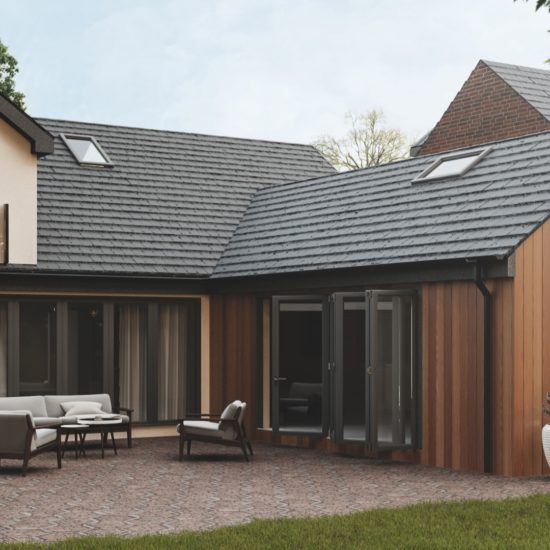
If you want to create a space that feels more spacious and that offers a seamless transition from indoor to outdoor, then bi-folding doors are nearly always the best choice. Bi-folding doors make for a great investment and offer you more options for ease of access to the space. But before you make a quick decision, it’s important to consider a few options pertaining to your spatial requirements, cost implications and aesthetic finishes.
Number of Panels
There are advantages and disadvantages to maximizing the number of bi-fold door panels in your design. As the panels fold up like a concertina when open, the more panels you choose the greater space the folded panels will occupy. Additionally, you want to bear the thermal performance in mind. It is not always the case, but more frames in bi-folding doors mean more chances of thermal bridging which can lead to less heat being kept in. Bi-fold doors may not be ideal for homes with limited indoor space, as bi-fold doors need to be stacked when they are open, so careful consideration of the number of panels are essential when working with limited space.
Impressive Views
Unlike sliding doors, bi-fold doors only offer a full view when completely open. However, frameless bi-folding doors are also a great option if you have a much larger space and want an unobstructed view of a garden, outdoor pool deck or grand vistas. These variations on the conventional bi-folding door provide a folding door but one that gives you much more glass and less visible aluminium than a typical bi-folding door.
Adding A Traffic Door
Some bi-folding doors do offer the option of adding a traffic door that allows your space to still offer ease-of-access to spaces on either side of the glass panes without having to fold all the panels open. If you choose not to have a traffic door, then you won’t be able to enter through the bi-folding doors from the outside when they are locked. If you have an alternative door, for instance, a kitchen door, this might not matter, but if you don’t, then not having one could prove to become a big inconvenience.
Versatility & Access
If it is about access bi-fold doors can be more versatile. They open the whole space, or you can open one panel for everyday use. They are also better than sliding doors because they create a level threshold between outdoor and indoor and therefore are much better suited to wheelchair users as there is no lip for people to trip over.
Materials & Finishing
Bi-folding doors come in quite a wide variety of materials and finishes these days compared to when they first entered popularity in the market. They are available in uPVC, timber and aluminium frames and can be made to suit your budget and design aspirations. uPVC is usually the lowest cost option, but it still looks great, provides excellent thermal insulation, and is hard-wearing, requiring very little maintenance. For some people, the elegance of timber bi-folding doors is impossible to beat, however, they require quite a bit of maintenance due to weathering and warping depending on the environmental conditions. Aluminium frames generally are recommended as they require much less maintenance and are made from thermally broken sections and therefore perform better.
Planning Approval
Will your new bi-folding doors/windows require planning approval? Changing or adding doors and windows to a property is usually classed as permitted development (PD), so permission is not normally necessary for folding sliding doors. However, PD rights can be removed or restricted by the local authority, especially in a conservation area and other designated areas such as National Parks. Flats do not have PD rights, so planning permission will be required. Any material alteration to a listed building will need listed building consent.
Where permission is required, it will usually be granted if the alteration does not affect the principal elevations of the house – usually the front. Some local authorities may require the doors to be made from timber in a conservation area.
It is always best to work with a qualified architect or firm, such as Draw Plan, to ensure that your plans are in-line with the local authority and guidelines.