

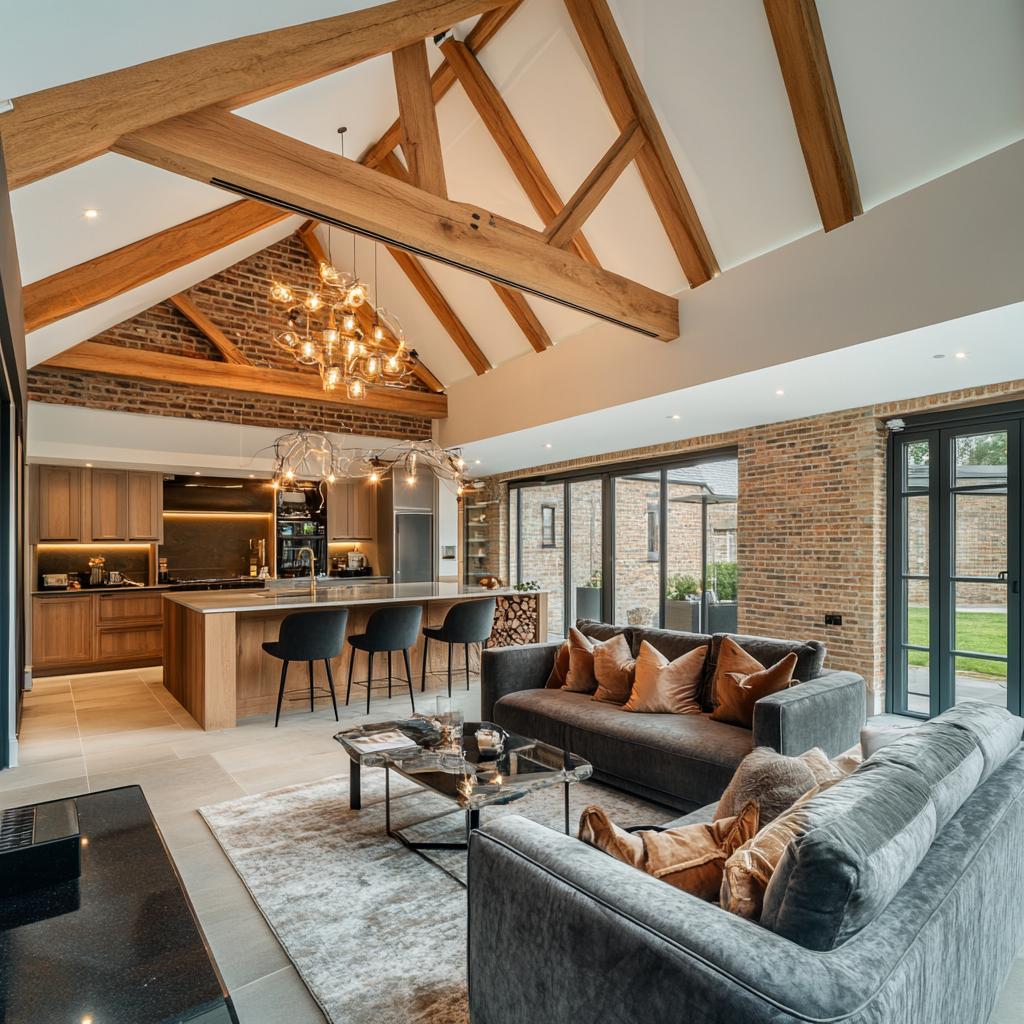
In homes across Wilmslow, Hale, and Alderley Edge, the entertaining space has become the room that defines how a property lives. It is where a Saturday evening dinner party unfolds, where family congregates on a Sunday afternoon, and where the quality of your home’s architecture is felt most directly. Getting this space right requires more than selecting furniture from a catalogue. It demands considered spatial planning, intelligent services design, and materials that perform under the demands of regular hosting.
Whether you are reconfiguring an existing ground floor layout in a Prestbury detached or planning a rear extension in Knutsford to create a dedicated entertaining wing, the design decisions you make at the outset will determine whether the space genuinely works for you. This guide covers the architectural and technical considerations specific to luxury Cheshire homes, from structural layouts and lighting design to outdoor integration, building regulations, and real-world cost expectations.
In this guide:
- Defining Your Entertaining Requirements
- Spatial Planning: Layout, Flow, and Zoning
- Lighting Design for Atmosphere and Flexibility
- Designing a Built-In Bar or Drinks Station
- Smart Home Integration for Entertaining
- Extending Outdoors: Kitchens, Fire Pits, and Covered Dining
- Material and Finish Specifications
- Structural and Regulatory Considerations
- How Draw Plan Supports Entertaining Space Projects
- Book a Consultation
Defining Your Entertaining Requirements
The most successful entertaining spaces are designed around specific use patterns rather than generic aspirations. Before any design work begins, a feasibility study helps establish what your property can accommodate structurally and what the planning context allows.
Questions that shape the design brief:
- Hosting frequency and scale: A household that entertains weekly with 6–8 guests needs a fundamentally different layout to one hosting quarterly events for 30+. The former prioritises intimacy and flexibility; the latter demands clear circulation routes, catering-grade kitchen access, and potentially separate WC provision.
- Formal or informal: A formal dining room with a 12-seat table, bespoke joinery, and acoustic treatment is a different project from an open-plan kitchen-diner that flows into a lounge. Many Cheshire homes benefit from a hybrid approach, with a defined dining zone within a larger open-plan space.
- Indoor-outdoor connection: Properties in Bowdon, Lymm, and Culcheth with generous rear gardens are ideally suited to entertaining spaces that extend seamlessly outdoors. Bi-fold or sliding door systems (budget £4,000–£8,000 for a 4–5 panel aluminium system) create this connection.
- Children and family use: If the space needs to function for both adult entertaining and family life, zoning becomes critical. Acoustic separation, durable materials, and sightlines between kitchen and play areas all factor into the design.
Spatial Planning: Layout, Flow, and Zoning
Layout is where entertaining spaces succeed or fail. The relationship between cooking, serving, seating, and circulation determines whether hosting feels effortless or stressful. For Cheshire properties where the entertaining space typically occupies a significant portion of the ground floor, the structural implications of open-plan layouts need careful consideration.
Removing internal walls to create open-plan living almost always involves load-bearing elements. A steel beam (RSJ) to support the structure above a removed wall typically costs £1,500–£4,000 installed, depending on span and loading. This work requires building regulations approval under Part A (Structure), and the steelwork specification must be calculated by a structural engineer.
Key spatial planning principles:
- The kitchen triangle, extended: In an entertaining kitchen, the traditional work triangle (hob, sink, fridge) expands to include a serving zone and a social zone. A kitchen island of at least 2.4m x 1.2m provides the dual function of food preparation and informal seating. Budget £8,000–£20,000 for a bespoke island with integrated storage, depending on material specification.
- Circulation width: Allow a minimum of 1.2m clear passage between furniture groups and 900mm between kitchen worktops for comfortable movement when the space is occupied. Part M of the Building Regulations requires accessible circulation routes where relevant.
- Zoning without walls: Changes in ceiling height, floor finish (timber to stone, for example), or lighting temperature define zones without physical barriers. A dropped bulkhead over a dining table or a change from engineered oak (£60–£120/m²) to polished porcelain tile (£40–£80/m²) signals a transition between spaces.
- Acoustic management: Open-plan spaces amplify noise. Soft furnishings, acoustic plaster on ceilings (from £60/m²), and strategic placement of fabric-covered panels (£200–£500 per panel) prevent the space from becoming uncomfortably loud during events.
Lighting Design for Atmosphere and Flexibility
Lighting is the single most effective tool for transforming mood in an entertaining space. A well-designed lighting scheme operates in layers, each independently dimmable, allowing you to shift from bright, functional kitchen lighting during preparation to warm, atmospheric glow during dinner.
- Ambient layer: Recessed LED downlights on DALI or phase-dimming circuits provide the base layer. For a 40m² open-plan space, budget £1,500–£3,000 for supply and installation of a dimmable downlight scheme, including wiring.
- Task lighting: Under-cabinet LED strips in the kitchen (£200–£500 installed) and focused pendants over worksurfaces ensure food preparation areas are properly lit. Colour temperature matters: 3000K (warm white) suits entertaining spaces far better than the 4000K (cool white) often defaulted to in kitchens.
- Feature and accent lighting: A statement pendant or chandelier over a dining table anchors the space visually. Bespoke fixtures from UK designers like Tom Dixon, Original BTC, or Bert Frank typically run £400–£2,000. LED strip lighting in joinery reveals, under floating shelves, or along architectural details adds depth without visual clutter.
- Exterior lighting: For entertaining spaces that extend outdoors, IP65-rated directional spots, in-ground uplights for planting, and festoon lighting over terrace areas create atmosphere after dark. A professional exterior lighting scheme for a rear garden terrace typically costs £2,000–£5,000.
All lighting circuits in a new installation or significant alteration must comply with Part P of the Building Regulations (Electrical Safety), which requires certification by a registered electrician.
Designing a Built-In Bar or Drinks Station
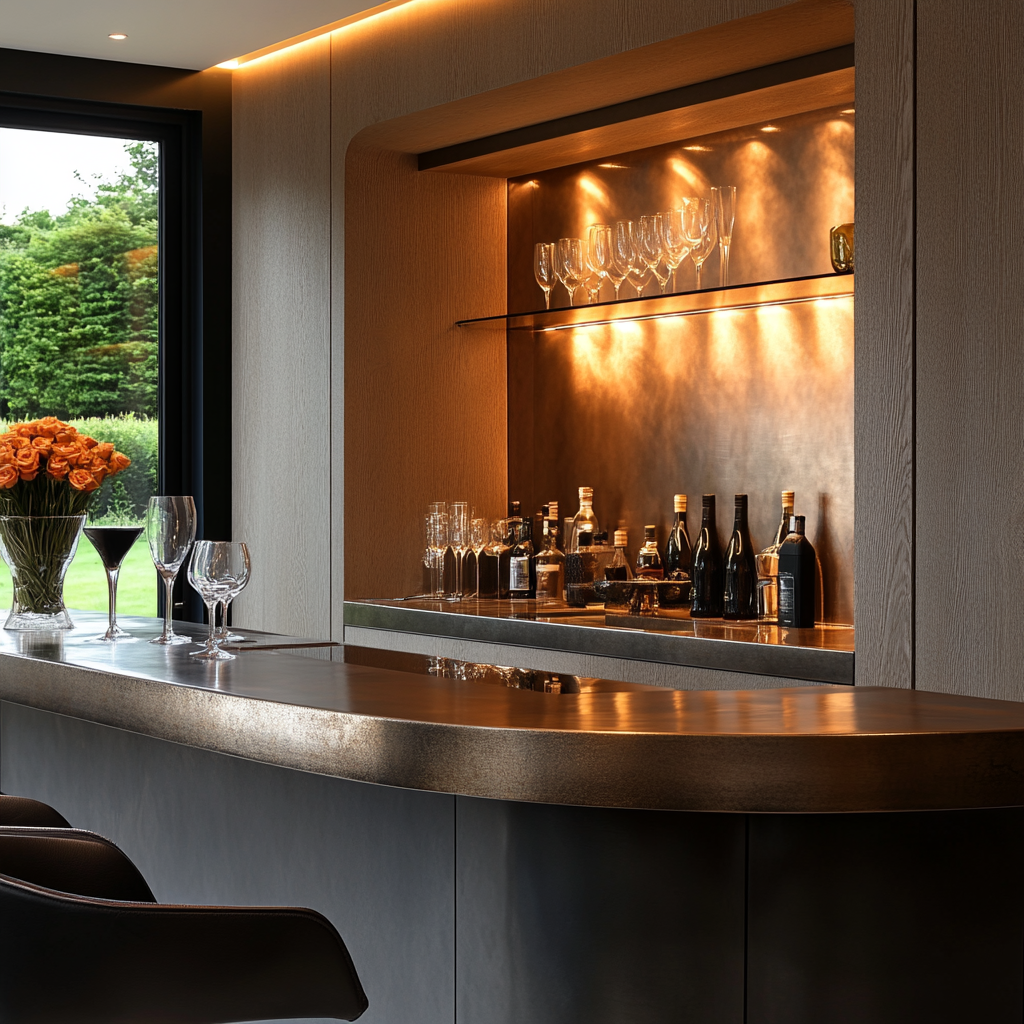
A dedicated drinks area elevates an entertaining space from functional to genuinely enjoyable. In Cheshire’s luxury market, integrated bars are an increasingly standard specification, particularly in properties across Hale Barns, Wilmslow, and Prestbury.
- Built-in wet bar: A full wet bar with plumbed sink, undercounter fridge, wine cooler, and bespoke cabinetry typically costs £6,000–£15,000 depending on specification. Plumbing for a bar sink requires connection to existing waste and supply runs, which is straightforward in ground-floor spaces but may need routing consideration in extensions.
- Wine storage: A temperature-controlled wine wall or cellar unit is a standout feature. Integrated wine cabinets from suppliers like Caple or Liebherr start at £1,500 for 40–60 bottle capacity. Bespoke glass-fronted wine rooms with climate control start at around £8,000.
- Countertop specification: The bar top is a tactile focal point. Engineered quartz (Silestone, Caesarstone) runs £250–£450 per linear metre fabricated and installed. Natural marble is more premium at £400–£700 per linear metre but requires sealing to prevent staining.
- Bar seating: Counter-height stools (650mm seat height for a 900mm counter, or 750mm for a 1050mm breakfast bar) in leather or upholstered fabric complete the setup. Quality bar stools from UK suppliers like Cult Furniture or Soho Home run £200–£600 each.
Smart Home Integration for Entertaining
Integrated technology removes friction from hosting. The best smart home installations for entertaining spaces are those that work invisibly, controlled through a single interface or pre-set scenes.
- Multi-room audio: Ceiling-mounted speakers from Sonos, Bluesound, or Bowers & Wilkins distribute music throughout the entertaining space and outdoors. A 4-zone ceiling speaker system with amplification typically costs £2,000–£5,000 installed. Planning speaker positions at design stage avoids visible cables and ensures optimal placement.
- Scene control: Lighting, audio, blinds, and heating consolidated into pre-set scenes (“Dinner Party”, “Cocktails”, “Movie Night”) through a system like Lutron, Control4, or Loxone. A basic scene control system for a single entertaining space starts at £3,000–£6,000.
- Motorised blinds and curtains: Electric blinds on south-facing glazing manage solar gain during summer entertaining. Budget £400–£800 per window for motorised roller blinds with smart home integration.
- Underfloor heating: For open-plan spaces with hard flooring, underfloor heating (UFH) provides even warmth without radiators cluttering wall space. Electric UFH mats cost £40–£60/m²; wet UFH systems are £60–£100/m² but more efficient for larger areas.
Extending Outdoors: Kitchens, Fire Pits, and Covered Dining
Cheshire’s generous plot sizes, particularly in areas like Lymm, Bowdon, and Culcheth, make outdoor entertaining spaces a natural extension of the indoor layout. The key is designing the outdoor area as an integral part of the entertaining sequence rather than an afterthought.
If your outdoor entertaining space involves a permanent structure such as a covered pergola, outdoor kitchen with fixed services, or a garden room, you may need planning permission. Permitted development rights allow certain outbuildings and structures without a planning application, but there are limits on height, footprint, and proximity to boundaries. Our guide on whether you need an architect for your project covers when professional input makes the difference.
- Outdoor kitchens: A built-in outdoor kitchen with gas BBQ, prep area, sink, and undercounter fridge typically costs £8,000–£20,000. Marine-grade stainless steel and natural stone worktops withstand the North West climate. Gas and water supply runs need routing from the house, which should be planned at design stage.
- Covered dining: A timber or aluminium pergola with louvred roof panels (£8,000–£15,000 for a 4m x 3m structure) extends usable outdoor time significantly. Integrated heating (infrared panels at £300–£600 each) and lighting make covered dining viable from April through October.
- Fire pits and fireplaces: A bespoke stone or Corten steel fire pit starts at £2,000. Built-in outdoor fireplaces with flue run £5,000–£12,000. Gas-fired options are cleaner and easier to manage than solid fuel.
- Landscaping integration: Raised planters, level changes, and specimen planting create enclosure and atmosphere. A landscaping scheme that integrates with a new terrace or entertaining area typically adds £5,000–£15,000 depending on scope.
Material and Finish Specifications
Material selection in an entertaining space must balance aesthetics with the reality of regular use. Spilled wine, high foot traffic, temperature changes, and moisture from cooking all test surfaces. The right specification looks premium on day one and still looks premium after five years of regular hosting.
- Flooring: Large-format porcelain tiles (600x600mm or 600x1200mm) in stone-effect finishes are the workhorse choice for open-plan entertaining spaces. They are stain-proof, easy to clean, and compatible with underfloor heating. Budget £40–£80/m² for quality tiles plus £30–£50/m² for installation. Engineered oak (£60–£120/m²) provides warmth in lounge zones.
- Kitchen worktops: Dekton (ultracompact sintered stone) is increasingly specified for high-end Cheshire kitchens due to its scratch, heat, and stain resistance. Budget £350–£500 per linear metre fabricated and installed. Granite and quartz remain popular at £250–£450 per linear metre.
- Wall finishes: Microcement or polished plaster feature walls (£80–£150/m²) create a contemporary, seamless finish. Timber panelling in oak or walnut (£100–£200/m²) adds warmth and acoustic absorption.
- Joinery: Bespoke built-in storage, media units, and bar cabinetry from a local joiner ensure a tailored fit. Cheshire-based joiners typically quote £5,000–£15,000 for a run of bespoke cabinetry depending on complexity and finish.
Structural and Regulatory Considerations
Most entertaining space projects in Cheshire involve some degree of structural alteration, whether that is removing walls, extending the property, or reconfiguring the ground floor layout. Understanding the regulatory requirements early prevents delays and unexpected costs.
- Structural alterations: Removing load-bearing walls, forming new openings, or installing mezzanine features all require structural engineer calculations and
building regulations drawings under Part A (Structure). Steel beam specifications, padstone details, and temporary support requirements must all be documented.
- Extensions: If your entertaining space requires a rear or side extension, this may fall under permitted development rights (single-storey rear extensions up to 4m for a detached house, or 3m for semi-detached, with prior approval). Larger extensions require a full planning application. Our
ground floor extension guide covers the permissions framework and cost expectations in detail.
- Part B (Fire Safety): Open-plan layouts that remove the separation between kitchen and escape routes may require compensatory measures such as a mist suppression system or upgraded fire detection.
- Part L (Energy): New extensions must meet current thermal performance standards. For a rear extension with large glazed openings, achieving the required U-values while maximising glass area needs careful specification of triple glazing and insulated cavity walls.
- Part P (Electrical): New lighting circuits, outdoor electrical installations, and smart home wiring must be certified by a registered Part P electrician.
In conservation areas across Cheshire, such as parts of Hale, Bowdon, and Knutsford, extensions and external alterations face additional planning scrutiny. Properties in Trafford Council or Cheshire East conservation areas should factor in additional time for the planning process.
How Draw Plan Supports Entertaining Space Projects
From initial concept through to construction-ready documentation, Draw Plan provides the full range of architectural drawings needed to turn an entertaining space vision into reality. View our portfolio for examples of residential projects across Cheshire.
Feasibility Drawings – Initial design concepts exploring layout options, structural implications, and planning viability for your entertaining space project.
Planning Drawings – Full planning application packages for extensions and external alterations, prepared for submission to Cheshire East, Warrington Borough, or Trafford Council.
Building Regulations Drawings – Detailed technical drawings covering structural calculations, thermal performance, fire safety, and electrical compliance for Building Control approval.
Book a Consultation
If you are planning an entertaining space project in your Cheshire home, whether that is a ground floor reconfiguration, a rear extension, or a full indoor-outdoor entertaining suite, a no-obligation consultation is the best starting point. We will discuss your brief, assess your property’s potential, and outline the design and regulatory pathway. Get in touch to book your free consultation and start planning your entertaining space.