

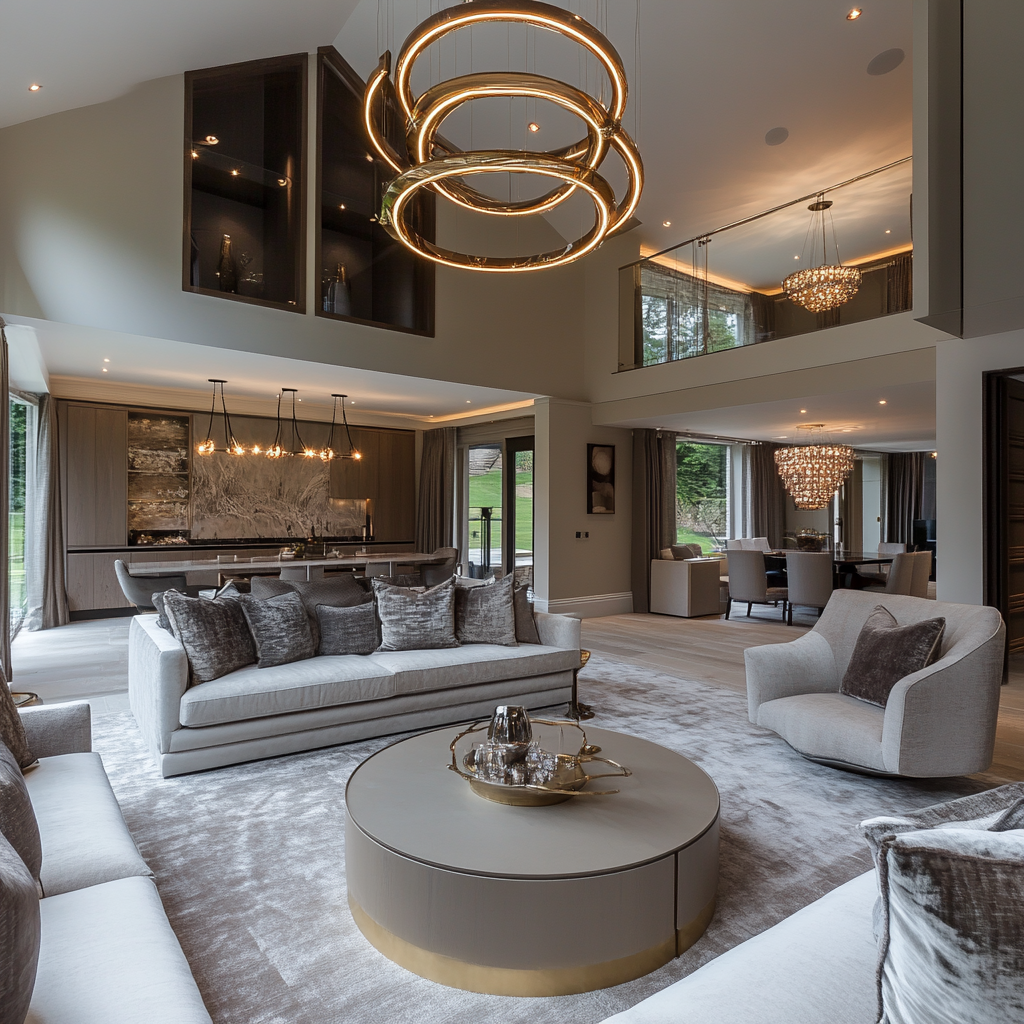
Commissioning an architect for a high-end residential project in Cheshire is not a commodity purchase. The difference between a competent practice and one that genuinely excels at luxury residential work shows up in every detail: the way natural light is managed through a double-height hallway in Wilmslow, the precision of a bespoke staircase in Hale, or the sensitivity with which a contemporary extension meets a Victorian villa in Alderley Edge. In a market where properties regularly trade above £1 million, the architect you choose directly shapes the value, liveability, and character of your home.
This guide examines the specific qualities that distinguish the best luxury home architects working in Cheshire and the North West, with practical guidance on what to look for, what to ask, and how the design and regulatory process works for high-end residential projects in areas like Prestbury, Knutsford, Bowdon, and Hale Barns.
In this guide:
- Deep Expertise in High-End Residential Design
- Design Vision That Responds to the Brief
- Precision in Detailing and Material Specification
- Knowledge of Premium Materials and Current Technology
- Navigating Planning and Building Regulations in Cheshire
- Reputation, Track Record, and Client References
- A Collaborative Design Process
- Landscape and Indoor-Outdoor Integration
- Sustainable Design Without Compromise
- How Draw Plan Supports Luxury Residential Projects
- Book a Consultation
Deep Expertise in High-End Residential Design
Luxury residential architecture is a specialism, not simply a larger version of standard house design. The best practices understand how to design spaces that feel proportionally right at scale: a 6m-wide kitchen-dining space needs different ceiling treatment and lighting design to a 3.5m room. They know how to manage the relationship between formal and informal spaces, how to create arrival sequences that set the tone for a home, and how to balance privacy with openness in properties that often sit on generous plots.
In Cheshire specifically, luxury residential expertise means understanding the local architectural vernacular. Properties in Prestbury and Alderley Edge often feature a Cheshire brick aesthetic that new designs need to either complement or consciously depart from. A practice with local experience will know how Cheshire East planners respond to contemporary insertions in established residential streets, and where the boundaries of acceptable design lie.
Questions worth asking at initial consultation:
- Portfolio relevance: Can you show me completed projects of similar scale and ambition in Cheshire? A strong
portfolio of local residential work is the most reliable indicator of capability.
- Design range: Do you work across contemporary and traditional styles, or specialise in one? The best Cheshire practices are fluent in both, because the local market demands it.
- Project scale: What is the typical budget range of your residential projects? An architect whose standard project is a £30,000 loft conversion may not be the right fit for a £500,000 whole-house remodel.
Design Vision That Responds to the Brief
The strongest luxury architects treat each project as a response to a specific brief, site, and client, not as a vehicle for their own signature style. This means the design for a young family’s contemporary new-build in Lymm should feel fundamentally different to a retired couple’s sensitive renovation of a Victorian rectory in Bowdon.
A good architect listens before they draw. The initial briefing process should feel thorough: they should ask about how you live day to day, how you entertain, what frustrates you about your current home, and what you admire in other properties. This intelligence shapes every design decision, from room adjacencies and circulation to window placement and storage strategy.
Design elements that distinguish luxury briefs:
- Bespoke spatial planning: Custom room proportions, double-height spaces, and considered sightlines rather than developer-standard room sizes.
- Material-led design: The architect specifies materials (natural stone, engineered timber, metal cladding) as integral to the design concept, not as afterthoughts selected from a builder’s standard range.
- Integrated services: Lighting design, acoustic treatment, smart home infrastructure, and underfloor heating are designed in from the outset rather than retrofitted.
Precision in Detailing and Material Specification
Detailing is where luxury architecture earns its fee. A shadow gap between a plastered wall and an oak door frame, the precise radius of a curved staircase handrail, the flush junction between a stone floor and a threshold strip: these are the details that separate a £1,500/m² build from a £3,000/m² one. The best architects produce detailed section drawings and 1:5 or 1:1 scale details for critical junctions, ensuring the builder delivers exactly what was designed.
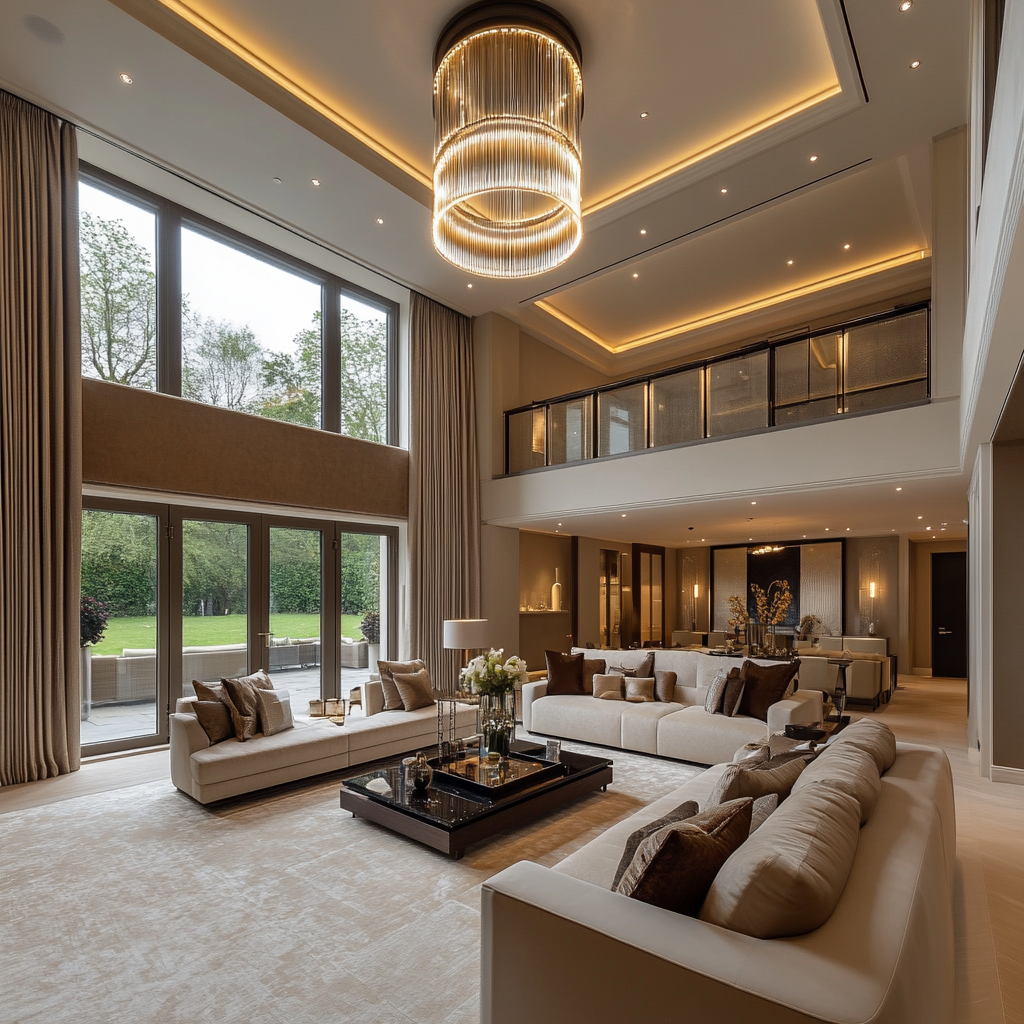
In Cheshire’s luxury market, common specification decisions include:
- Joinery: Bespoke hardwood windows and doors (£1,200–£3,000 per unit) versus high-end aluminium systems (Schuco, Origin, or Reynaers at £800–£2,000 per unit). The choice affects both the aesthetic and the thermal performance under Part L.
- Stone and tile: Natural stone flooring (Limestone, Travertine, or Yorkstone at £80–£200/m²) versus large-format porcelain (£40–£80/m²). The architect should specify with both aesthetic intent and practical performance in mind.
- Metalwork: Bespoke steel-framed glazing (Crittall-style or genuine Crittall at £1,500–£3,000 per panel) adds character that standard aluminium cannot replicate.
- Kitchen and bathroom specification: A luxury architect coordinates with kitchen designers and bathroom specialists to ensure architectural details (niche dimensions, extraction routes, lighting positions) integrate seamlessly with the fitted elements.
Knowledge of Premium Materials and Current Technology
The best luxury architects maintain active knowledge of material innovation and building technology. This includes understanding the performance characteristics of materials (not just their appearance), current Building Regulations implications, and supply chain realities.
- Structural glazing: Triple-glazed, thermally broken aluminium or timber-aluminium composite systems that achieve U-values of 0.8 W/m²K or better, exceeding Part L requirements while delivering the slim sightlines that luxury properties demand.
- Insulation and airtightness: Achieving Passivhaus-adjacent performance levels (air permeability below 3 m³/h/m² at 50Pa) through careful detailing of the thermal envelope. This is increasingly specified in high-end Cheshire new-builds where running costs and comfort are priorities.
- Smart home integration: Working with smart home consultants to ensure infrastructure (structured cabling, containment routes, server cupboard locations) is designed into the building from RIBA Stage 3, not added as an afterthought during fit-out.
- Renewable technology: Air source heat pumps, solar PV, MVHR (Mechanical Ventilation with Heat Recovery), and battery storage are now routinely specified in luxury Cheshire homes. The architect should understand how these systems affect spatial planning, plant room requirements, and acoustic performance.
Navigating Planning and Building Regulations in Cheshire
An architect’s ability to navigate the planning system is as important as their design skill, particularly in Cheshire where many luxury homes sit within or adjacent to conservation areas, Green Belt, or established residential character areas. The best practices have working relationships with local planning authorities and understand how to present applications that anticipate and address likely objections.
Key regulatory knowledge for luxury projects:
- Conservation areas: Properties in parts of Hale, Bowdon, Knutsford, Prestbury, and Alderley Edge face additional planning scrutiny. Permitted development rights are often restricted, meaning even relatively modest alterations require formal
planning applications. A skilled architect frames the design narrative to satisfy Conservation Officer concerns while achieving the client’s ambitions.
- Green Belt: Large parts of Cheshire fall within Green Belt, where new construction and extensions face the “very special circumstances” test. The best architects understand how to work within Green Belt policy, including replacement dwelling strategies and proportionate extension arguments.
- Building Regulations: Luxury projects often involve complex regulatory intersections: Part A (Structure) for dramatic open-plan spaces, Part B (Fire Safety) for properties over three storeys or with integrated garages, Part L (Energy) for large glazed elevations, and Part M (Access) for level thresholds and accessible bathrooms. Comprehensive
building regulations drawings ensure smooth Building Control approval.
- Pre-application advice: For ambitious projects, a pre-application enquiry to Cheshire East, Warrington Borough, or Trafford Council (£250–£600 depending on the authority) provides early feedback on acceptability before committing to a full design programme.
Reputation, Track Record, and Client References
In luxury residential work, reputation compounds. A practice that has delivered successful projects in Wilmslow, Hale, and Prestbury will have a network of trusted structural engineers, builders, and specialist contractors who understand the quality expectations. This network is as valuable as the architect’s own design skill, because a beautiful design poorly built is worse than a modest design executed flawlessly.
How to evaluate an architect’s track record:
- Client references: Ask to speak with previous clients, particularly those with projects of similar scale. A confident practice will facilitate this willingly.
- Completed project visits: Where possible, visit a completed project in person. Photographs are curated; a site visit reveals the quality of detailing, the feel of the spaces, and how the building has aged.
- Professional accreditation: ARB (Architects Registration Board) registration is a legal requirement to use the title “architect”. RIBA Chartered Practice status indicates adherence to professional standards and ongoing CPD. Check both.
- Awards and recognition: Regional and national architecture awards (RIBA Awards, Cheshire Best Kept Gardens and Building Awards, local planning excellence awards) indicate peer recognition of quality.
A Collaborative Design Process
The best luxury architects structure their process to involve the client at every meaningful decision point without overwhelming them with technical minutiae. The RIBA Plan of Work provides the standard framework, and a well-run practice will explain how their process maps to it.
Understanding whether you need an architect and what the process involves helps set expectations from the outset.
Typical stages for a luxury residential project:
- Feasibility and brief development: Site appraisal, measured survey, initial design options, and budget reality-checking. A
feasibility study at this stage prevents wasted investment in designs that cannot be delivered within the budget or planning context.
- Concept design: Sketch proposals, 3D visualisations, and material mood boards that bring the design to life before any technical work begins.
- Developed design and planning: Detailed floor plans, elevations, sections, and a Design and Access Statement for planning submission.
- Technical design: Full construction drawings, structural details, services coordination, and specification schedules that give the builder everything needed to price and build accurately.
- Construction support: Regular site visits, progress reviews, and decision support through to completion. For a luxury project, this oversight is essential to maintain design quality through the build.
Landscape and Indoor-Outdoor Integration
Cheshire’s generous residential plots, particularly in areas like Prestbury, Alderley Edge, and Lymm, create opportunities for indoor-outdoor integration that smaller urban sites cannot offer. The best luxury architects design the landscape as an extension of the interior, not as a separate discipline.
- Threshold design: Level thresholds between interior and terrace (flush track systems for bi-fold or sliding doors) create a seamless flow. This requires careful detailing of drainage channels and DPC (damp-proof course) junctions to comply with Part C of the Building Regulations.
- Outdoor rooms: Covered terraces, garden pavilions, and pool houses designed with the same material quality and spatial consideration as the main house. These structures may require planning permission depending on size, height, and proximity to boundaries.
- Kitchen garden and utility integration: For larger properties, integrating a kitchen garden with the main entertaining and cooking spaces through considered sightlines and access routes adds both lifestyle value and property appeal.
Sustainable Design Without Compromise
Sustainability in luxury homes is no longer about visible solar panels and compromise. The best architects integrate environmental performance into the design DNA so that the home performs efficiently while looking and feeling exactly as the client intended.
- Fabric-first approach: High-performance insulation, airtight construction, and thermal bridge-free detailing reduce energy demand at source. This is more effective and less intrusive than bolt-on renewables.
- Air source heat pumps: Now the default heating specification for luxury new-builds in Cheshire, replacing gas boilers. An ASHP system for a 300m² house typically costs £12,000–£18,000 installed, with running costs 30–40% lower than gas.
- MVHR: Mechanical Ventilation with Heat Recovery provides continuous fresh air while recovering up to 90% of outgoing heat. Essential for airtight new-builds and increasingly specified in high-end refurbishments. System costs for a 4–5 bedroom house run £5,000–£8,000 plus ductwork.
- EPC and future regulation: With EPC requirements tightening, a new-build or major renovation designed to current best practice will future-proof the property against regulatory changes that could affect resale value.
How Draw Plan Supports Luxury Residential Projects
Draw Plan provides the full spectrum of architectural drawings for luxury residential projects across Cheshire, from initial concept through to construction-ready technical packages. View our portfolio for examples of completed residential work, or explore our full range of architectural services.
Feasibility Drawings – Initial design concepts, site appraisals, and viability assessments to establish what your property and site can accommodate before committing to a full design programme.
Planning Drawings – Complete planning application packages prepared for Cheshire East, Warrington Borough, Trafford Council, or other relevant local authorities, including Design and Access Statements for sensitive sites.
Building Regulations Drawings – Comprehensive technical drawings covering structural design, thermal performance, fire safety, and accessibility for Building Control approval.
Book a Consultation
If you are planning a luxury residential project in Cheshire, whether a new-build, a whole-house renovation, or a significant extension, a no-obligation consultation is the best first step. We will discuss your brief, assess your site’s potential, and outline the design and regulatory pathway for your project. Get in touch to book your free consultation.